
Australian café culture · Community and history
Coffee and Multicultural Australia: Beyond the Italian Espresso Story
Learn how migration and different communities shaped Australian café culture, from coffee palaces to Greek cafés, postwar espresso and contemporary neighbourhoods.
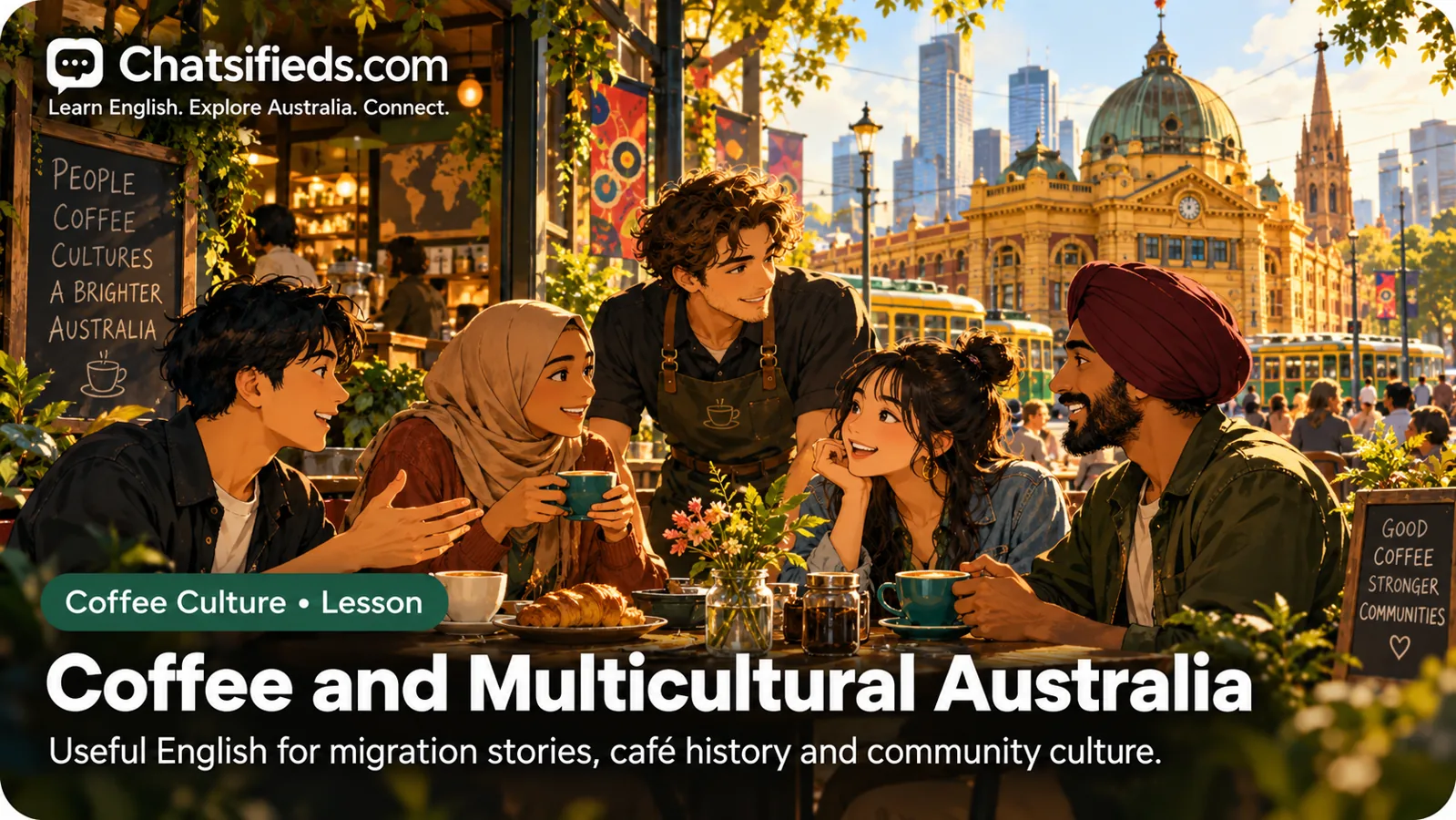
Updated 16/10/2026 · Educational guide
Quick answer
Australia's café history did not begin with espresso. Museums Victoria documents early coffee houses and palaces, street stalls and European-style coffee lounges before espresso became widely popular.
Understanding the context
Postwar Italian migrants are an important part of Melbourne's espresso story. State Library Victoria documents Italian businesses, espresso machines and growing café life in the 1950s. Greek and Jewish migration also contributed to the city's food, hospitality and café culture; Australia's coffee history should not be reduced to one community.
Museums Victoria documents Greek migrants working in restaurants, cafés and shops, and State Library Victoria records Greek social clubs where coffee and conversation helped sustain cultural identity. Later migration from many parts of the world has also shaped Australia's food and social life. It is more accurate to present these as overlapping histories than to claim one culture invented modern Australian cafés.
When discussing other people's heritage, avoid assuming everyone from a community shares the same food or coffee preferences. Ask about individual experience respectfully.
Useful English vocabulary
- migration
- moving to settle in a different country or place
- espresso bar
- a café focused on espresso-based drinks
- coffee palace
- a historical alcohol-free hospitality venue associated with the temperance movement
- heritage
- history, culture and traditions passed down through generations
- multicultural
- involving people and communities with varied cultural backgrounds
Conversation practice
A: I thought Melbourne coffee began with Italian espresso cafés.
B: Italian migrants had a major influence, but there were older coffee houses and other communities' café traditions too.
A: Where could I learn more?
B: Try the Museums Victoria and State Library Victoria collections.
A longer conversation: talking about coffee history and heritage
A: I'm doing a project about Melbourne's café history. Could I ask you a few questions?
B: Sure. I'm no expert, but I'm happy to share what I know.
A: I read that coffee palaces existed before espresso became popular. Is that right?
B: As far as I know, yes. Museums Victoria has information about them.
A: And Italian migrants were important for espresso, weren't they?
B: Yes, postwar Italian migrants played a big part. But other communities, like Greek migrants, also shaped cafés and hospitality.
A: That's interesting. Could you tell me more about the Greek social clubs?
B: I only know the basics. I think they were places for coffee and conversation. State Library Victoria has records if you want details.
A: My family moved here from another country too. Do you think everyone from one community drinks the same coffee?
B: I wouldn't say so. It's better to ask each person about their own experience.
A: That makes sense. Thanks for your help!
B: No problem. Good luck with your project.
- "As far as I know" means you are sharing what you know, but you might not have every fact. It is a modest, honest phrase.
- "I read that ..." shows where an idea comes from and does not claim to be the final word.
- "Could you tell me more about ...?" is an open, respectful way to invite someone to share their knowledge.
More useful phrases
- As far as I know, ...
- This is what I understand, but I may not know everything.Use it: When you share information you are fairly, but not completely, sure about.
- I read that ...
- I found this information in something I read.Use it: When mentioning a source without claiming certainty.
- Could you tell me more about ...?
- Please give me more information.Use it: To invite someone to explain a topic or their experience.
- Would you be comfortable sharing ...?
- Is it okay to tell me about this? You can say no.Use it: When asking about someone's family or heritage.
- Where can I find reliable information on this?
- Which sources are trustworthy?Use it: When you want to research further, for example at a museum or library.
- There are several overlapping stories.
- Many histories happened together and connect.Use it: When explaining that no single group tells the whole story.
Common mistakes and better ways to say it
Less helpful: “Italians invented Australian café culture.”
Try instead: “Postwar Italian migrants were an important part of the story, alongside other communities.”
The lesson presents these histories as overlapping, not as one group's invention.
Less helpful: “You're Greek, so you must love Greek coffee.”
Try instead: “Do you have a favourite way to take your coffee?”
People from the same community do not all share the same preferences.
Less helpful: “Everybody knows that coffee started with espresso in Australia.”
Try instead: “I thought it started with espresso, but I read there were earlier coffee houses.”
Saying what you thought and learned is more accurate and more open to learning.
Less helpful: “Why did your family leave your country?”
Try instead: “Would you be comfortable sharing how your family came to Australia?”
Migration can be a sensitive topic, so give the person a choice about answering.
Heritage is personal as well as historical
Museums and libraries record important parts of migration history, but each family also has its own story. Two people from the same background may remember very different things, so open questions work better than guesses.
In Australia, many people enjoy sharing stories about food, family and traditions, but they usually appreciate being asked first. You can begin with a general question about the place or the history, and let the other person decide how much to say. If you want to read more, Museums Victoria and State Library Victoria are good places to start.
Advertisement
Try it yourself
Explain in your own words why a city's coffee history includes more than one migration story.
Phrase Wall practice: use this phrase
Where could I learn more about this?
Say the example aloud, then try it in a real conversation. Discover more useful phrases and save your favourites to My Learning.
Quick check
Think about each answer first, then open “Show answer”. This is a self-check, not a scored quiz.
1. What does 'heritage' mean?
- A kind of coffee machine
- History, culture and traditions passed down through generations
- A café menu
Show answer
Answer: B. History, culture and traditions passed down through generations The lesson defines heritage as history, culture and traditions passed down through generations.
2. Which phrase shows you are not completely certain?
- As far as I know, ...
- Everyone agrees that ...
- It is impossible that ...
Show answer
Answer: A. As far as I know, ... 'As far as I know' signals that you are sharing your understanding, not a final fact.
3. What does the lesson say about the history of Australian cafés?
- One community invented them
- Espresso was the only beginning
- It involves overlapping histories from several communities
Show answer
Answer: C. It involves overlapping histories from several communities The lesson says it is more accurate to present overlapping histories than to credit one culture.
4. You want to learn more about a family's heritage. What is the most respectful question?
- Would you be comfortable sharing your family's story?
- Tell me what people like you drink.
- Why are you different?
Show answer
Answer: A. Would you be comfortable sharing your family's story? This question gives the person a choice and avoids assumptions about their preferences.
Frequently asked questions
Where can I learn more about Australian coffee history?
The lesson points to Museums Victoria and State Library Victoria, which have collections about café culture and migration.
Did espresso start Australia's café history?
No. Museums Victoria documents earlier coffee houses and palaces. Espresso became widely popular later, and postwar Italian migrants were an important part of that story.
Is it okay to ask someone about their heritage?
Often yes, if you ask politely and let them choose how much to share. Avoid assuming they share the same tastes as everyone from their community.
What is a coffee palace?
It was a historical alcohol-free hospitality venue connected to the temperance movement. Check Museums Victoria for more detail.
Chatsifieds Phrase Wall
Take three useful phrases into real Australian conversation.
Practise these related phrases, learn what they mean and build confidence before you use them in real life.
Printable practice
Worksheet for this unit: Café life, culture and community
Practise the words and phrases from this lesson on paper. The worksheet is made only from lesson material, and teachers can use the answer key and teacher pack.
Phrase Wall & business learning
Practise this English in real life
Explore Australian English on the Phrase Wall. Sponsored offers are clearly labelled and never change learning answers.
Keep learning on Chatsifieds
- Australian Coffee Culture hub
- Café social English
- Learning journeys
- Phrase Wall
- Why Neighbourhood Cafés Matter to Australian Communities
- How Italian Migration Shaped Australian Cafe Culture
- A Short History of Australian Coffee Culture
- Vittoria Coffee & Italian-Australian Culture | ESL Story
- Quists Coffee: Coffee History + Business Longevity | Australian Coffee English
Independent research and heritage sources
These sources support the cultural and historical context and are not paid or reciprocal links.